Mixed Trends in FMCG Ad Spends: HUL, Colgate & Dabur Cut Back, While Emami, Marico & GCPL Boost Investments
MARKETING BUZZ
2/7/20253 min read
Mixed Trends in FMCG Ad Spends: HUL, Colgate & Dabur Cut Back, While Emami, Marico & GCPL Boost Investments
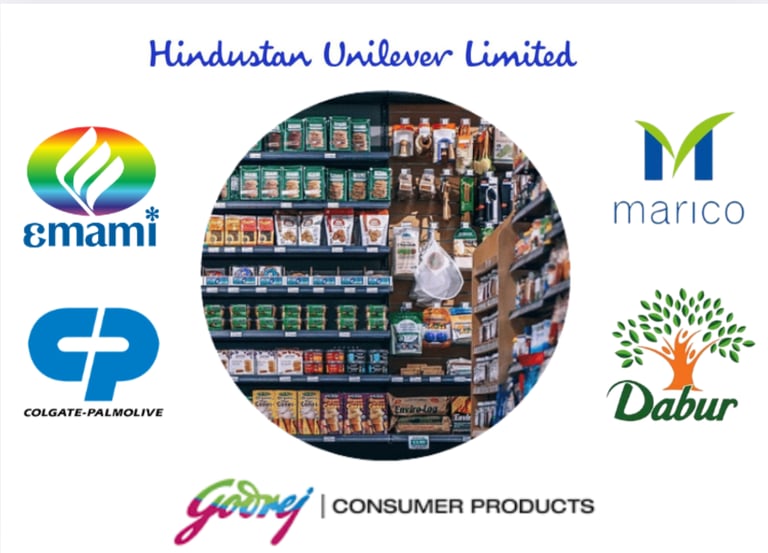
The Fast-Moving Consumer Goods (FMCG) sector, known for its heavy investments in advertising, witnessed mixed trends in Q3FY25. While Hindustan Unilever (HUL), Colgate-Palmolive India (ColPal), and Dabur India scaled back their advertising expenditures, Emami, Marico, and Godrej Consumer Products Ltd (GCPL) continued to increase their marketing budgets.
This trend underscores how companies adjust their advertising strategies in response to market conditions, consumer demand, and competitive pressures. While some optimise costs, others are doubling down on ad spending to strengthen their brand presence.
Key Advertising Trends Across FMCG Players
1. Hindustan Unilever (HUL): A Conservative Approach
HUL, the parent company of Surf Excel, Dove, Lakmé, and Brooke Bond, cut its Q3 ad spends by 7.32% YoY, bringing it down to ₹1,507 crore from ₹1,626 crore in Q3FY24.
Additionally, for the nine-month period ending December 31, 2024, HUL reduced its advertising budget by 3.78% YoY, spending ₹4,689 crore compared to ₹4,873 crore in the same period last year.
This suggests that HUL prioritises cost optimization amid market uncertainties, possibly reallocating resources to performance-driven marketing and digital channels rather than large-scale ad campaigns.
2. Colgate-Palmolive India: A Balanced Strategy
Colgate-Palmolive took a dual approach to advertising expenditure:
Q3FY25 Ad Spend: Down by 2.04% YoY, from ₹204.26 crore to ₹200.10 crore.
Nine-Month Ad Spend: Up 8.51% YoY, from ₹591.55 crore to ₹641.89 crore.
While the company curtailed spending in Q3, it maintained an overall increase in advertising over nine months, signalling a long-term investment approach to brand visibility.
3. Dabur India: A Contradictory Trend
Dabur India, home to brands like Dabur Chyawanprash, Real Juice, and Dabur Red Paste, also followed a mixed trend:
Q3FY25 Ad Spend: Declined by 7.29% YoY, dropping from ₹244.54 crore to ₹226.72 crore.
Nine-Month Ad Spend: Increased by 3.43% YoY, rising from ₹665.41 crore to ₹677.24 crore.
This indicates that while short-term cost-cutting measures were implemented in Q3, the company still increased ad investments on a broader scale to sustain brand awareness.
Companies That Increased Ad Spends in Q3FY25
4. Godrej Consumer Products Ltd (GCPL): Steady Growth
GCPL, the parent company of Good Knight, Cinthol, HIT, and Godrej Expert, slightly increased its advertising spending:
Q3FY25 Ad Spend: ₹364.37 crore, up 0.29% YoY from ₹343.27 crore in Q3FY24.
Nine-Month Ad Spend: ₹1,059.14 crore, up 2.92% YoY from ₹1,029.60 crore in the same period last year.
Although the growth rate is moderate, GCPL remains consistent in its marketing investments, ensuring sustained consumer engagement.
5. Marico: Aggressive Advertising Approach
Marico, known for brands like Parachute, Saffola, Livon, and Set Wet, significantly ramped up its advertising budget:
Q3FY25 Ad Spend: ₹293 crore, up 19.10% YoY from ₹246 crore in Q3FY24.
Nine-Month Ad Spend: ₹823 crore, up 13.36% YoY from ₹726 crore in the previous fiscal.
This suggests Marico is focusing on expansion, particularly in segments like premium hair care, health foods, and digital-first brands.
6. Emami: Continued Investment in Brand Building
Emami, known for Navratna, BoroPlus, Zandu Balm, and Fair & Handsome, also increased its marketing spends:
Q3FY25 Ad Spend: ₹175.73 crore, up 6.03% YoY from ₹165.73 crore in Q3FY24.
Nine-Month Ad Spend: ₹505.14 crore, up 7.02% YoY from ₹472.01 crore last year.
This indicates Emami’s commitment to brand reinforcement, particularly in categories with strong seasonal demand.
What’s Driving These Trends?
Market Volatility & Cost Optimization
Companies like HUL, Colgate, and Dabur may rationalise their advertising budgets in response to economic fluctuations, changing consumer sentiment, and inflationary pressures.
Some brands may also be shifting towards digital marketing, reducing traditional ad spend while still maintaining consumer engagement.
Focus on Long-Term Growth
Marico, Emami, and GCPL appear to be betting on brand-building with higher ad investments, signalling confidence in future sales growth.
These companies will likely target new product launches and high-growth categories, especially in health & wellness, personal care, and premium FMCG segments.
Strategic Shifts in Media Mix
Rising digital adoption and the emergence of e-commerce-driven marketing could influence how and where companies allocate their ad budgets.
Brands increasing ad spend may be prioritizing performance-based digital advertising, influencer marketing, and OTT promotions.
The Road Ahead for FMCG Advertising
The diverging advertising strategies in Q3FY25 suggest that FMCG companies are making calculated moves based on their business priorities and market dynamics.
Companies reducing ad spend (HUL, Colgate, Dabur) are likely focusing on cost efficiency and targeted campaigns rather than large-scale advertising.
Companies increasing ad spend (Emami, Marico, GCPL) are investing in long-term brand equity and market expansion.
As the FMCG landscape continues to evolve, brands will need to balance short-term profitability with long-term brand investments to stay ahead in a competitive market.
Connect
Stay updated with our latest marketing insights.
Follow
Subscribe
+919818636980
© 2025. All rights reserved.