
Understanding Programmatic Advertising: A Comprehensive Guide
Programmatic advertising is revolutionizing digital marketing by automating ad buying with data-driven precision. This comprehensive guide explores its fundamentals, benefits, key components, and best practices to help marketers maximize ROI. Whether you're a beginner or an expert, dive into the world of programmatic ads and discover how they enhance targeting, efficiency, and campaign performance.
DIGITAL MARKETING
2/4/20256 min read

Understanding Programmatic Advertising: A Comprehensive Guide
Introduction
In the rapidly evolving digital marketing landscape, programmatic advertising has emerged as a game-changer. This automated method of buying and selling digital ad space offers increased efficiency, better targeting, and significant cost savings. In this comprehensive guide, we will dive deep into the fundamentals of programmatic advertising, the technology driving it, its advantages, challenges, and best practices for creating effective campaigns. By the end of this article, you’ll have a clear understanding of how programmatic advertising works and how you can leverage it for your business.
1. The Fundamentals of Programmatic Advertising
1.1 What is Programmatic Advertising?
Programmatic advertising refers to the use of software and algorithms to buy and place digital ads in real-time, with minimal human intervention. Unlike traditional advertising, which often involves manual negotiations and direct contracts between advertisers and publishers, programmatic advertising uses automated systems to make decisions about where and when ads should appear.
Over time, programmatic advertising has evolved from simple display ads to more sophisticated formats, including video, mobile, and social ads. This evolution has drastically increased the speed and efficiency of the ad-buying process, offering marketers new opportunities to target specific audiences with precision.
1.2 Key Components of Programmatic Advertising
Several key components make up the programmatic advertising ecosystem:
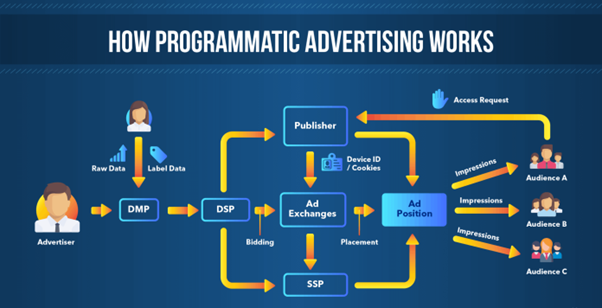
Demand-Side Platforms (DSPs): These platforms allow advertisers to purchase ad inventory across various sources using data to optimize targeting and pricing.
Supply-Side Platforms (SSPs): SSPs are used by publishers to manage and sell their ad inventory programmatically. They help maximize the value of ad space by offering it to multiple DSPs.
Data Management Platforms (DMPs): DMPs collect, organize, and analyze vast amounts of data from different sources. These platforms help advertisers segment audiences more effectively and make data-driven decisions, improving targeting and campaign optimization.
Ad Exchanges: These are digital marketplaces where DSPs and SSPs connect, enabling real-time bidding and automated transactions of ad inventory.
1.3 Types of Programmatic Advertising
There are several types of programmatic advertising, each offering different levels of guarantee and auction dynamics:
Real-Time Bidding (RTB): RTB is the most common form of programmatic advertising, where ad space is bought in real-time through auctions. It allows advertisers to bid for impressions based on user data and the context in which the ad will appear. This includes both 1-Few Deals (Private Marketplaces) and 1-All Deals (Open Auction):
1-Few Deals (Private Marketplaces): In a private marketplace, publishers offer remnant inventory to a select group of advertisers. These deals are not guaranteed, but there is a floor price set by the publisher. Advertisers bid for this space, and the highest bidder wins the impression. It provides exclusivity and premium pricing without direct negotiations.
1-All Deals (Open Auction): This deal type is open to all advertisers where the inventory is made available through an open auction. There are no restrictions on who can bid, and the inventory is sold to the highest bidder in real-time.
Programmatic Direct or 1-1 Deals: These are guaranteed deals where the advertiser forecasts the number of impressions they want to buy on a publisher’s site. The publisher sells these impressions at a premium price. This arrangement guarantees the advertiser access to specific inventory, ensuring that the required impressions are served. It’s often used for high-value campaigns that require more control over placement and audience targeting.
2. The Technology Behind Programmatic Advertising
2.1 How Programmatic Advertising Works
Programmatic advertising operates on a complex technology stack that automates ad buying and placement. Here’s how the process typically works:
Data Collection: As users interact with online content, data is collected, such as browsing habits, demographics, and location.
Real-Time Auction: When a user visits a website or app, an ad request is sent to an ad exchange. Advertisers bid in real-time for the opportunity to serve an ad to that user.
Ad Placement: The highest bidder wins the auction, and the ad is displayed to the user almost instantaneously.
At every step, data management platforms (DMPs) help organize and analyze the data, ensuring ads are shown to the right audience at the right time.
2.2 The Role of Data in Programmatic Advertising
Data is at the heart of programmatic advertising. There are three main types of data used:
First-Party Data: Information gathered directly from the advertiser’s own interactions with users (e.g., website visits, purchase history).
Second-Party Data: Data shared between trusted partners, like another brand or publisher, which adds a layer of granularity.
Third-Party Data: External data purchased from data brokers that offer insights into broader audience behaviors and interests.
As privacy concerns increase, regulations like GDPR and CCPA are becoming integral to how data is collected and used in programmatic advertising.
2.3 Future Technologies Impacting Programmatic Advertising
The future of programmatic advertising looks promising, with emerging technologies enhancing its capabilities:
Machine Learning & AI: These technologies help improve ad targeting and optimization by analyzing large datasets to predict user behavior and automate decision-making.
Blockchain: Blockchain technology can address concerns about transparency and fraud, providing a secure and verifiable way to track ad transactions.
Automation: As automation advances, the ability to dynamically adjust campaigns based on real-time performance will make programmatic advertising even more efficient.
3. Advantages of Programmatic Advertising
3.1 Efficiency and Cost-Effectiveness
Programmatic advertising streamlines the ad-buying process, reducing the need for manual labor and increasing operational efficiency. Advertisers can also adjust their bids in real-time, optimizing their ad spend to achieve the best results at the lowest cost.
3.2 Enhanced Targeting Capabilities
Programmatic advertising allows advertisers to target users based on a variety of factors, including:
Behavior-Based Targeting: Targeting users based on their browsing history, past purchases, or interactions with the brand.
Contextual Targeting: Ads are placed based on the content surrounding them, ensuring relevance to the user.
Lookalike Audiences: Advertisers can target audiences that resemble their best customers, increasing the chances of successful conversions.
3.3 Improved Measurement and Analytics
With programmatic advertising, performance is continuously measured, allowing marketers to track key performance indicators (KPIs) like click-through rates (CTR), conversions, and return on ad spend (ROAS). This data-driven approach helps optimize campaigns in real-time and improves overall ROI.
4. Challenges in Programmatic Advertising
4.1 Ad Fraud and Security Issues
Ad fraud, such as fake impressions and click fraud, is a significant concern in programmatic advertising. However, verification services and fraud detection tools are helping combat these issues by ensuring that ad spending is not wasted on invalid traffic.
4.2 Ad Fatigue and User Experience
Too many ads can lead to ad fatigue, negatively impacting user experience. To combat this, marketers must carefully balance ad frequency with quality content, ensuring they engage users without overwhelming them.
4.3 Regulatory Challenges
Programmatic advertising is heavily influenced by data privacy regulations like GDPR and CCPA. Advertisers must ensure that their campaigns are compliant with these laws, which often requires transparent data collection and user consent.
5. Best Practices for Effective Programmatic Advertising Campaigns
5.1 Setting Clear Objectives and KPIs
To ensure campaign success, it’s crucial to define clear objectives and KPIs. This will help measure the effectiveness of your programmatic efforts and enable real-time optimization.
5.2 Choosing the Right Platforms and Tools
Selecting the right DSPs, SSPs, and DMPs is essential for successful programmatic advertising. Evaluate platforms based on their targeting capabilities, inventory quality, and ease of integration.
5.3 Ongoing Optimization and Adaptation
Continuous testing and optimization are key to achieving long-term success. Adapt campaigns based on real-time data and always be open to feedback and insights from your audience.
Conclusion
Programmatic advertising has transformed the digital marketing landscape, offering businesses a more efficient and effective way to reach their target audience. With its advanced targeting capabilities, real-time optimization, and data-driven approach, it’s clear why programmatic advertising is here to stay. As technology continues to evolve, the future of programmatic advertising looks even more promising, with innovations like AI, machine learning, and blockchain set to further enhance its capabilities. By following best practices and staying ahead of emerging trends, marketers can leverage programmatic advertising to drive better results and achieve lasting success in the digital age.
What is Programmatic Advertising? (for beginners)

Frequently asked questions
1. What is the difference between programmatic and traditional advertising?
Programmatic advertising uses automation and data to buy ad space in real-time, while traditional advertising often relies on manual negotiations and fixed contracts.
2. How can small businesses benefit from programmatic advertising?
Small businesses can benefit from programmatic advertising by gaining access to highly targeted audiences at a lower cost, allowing for better ROI on ad spend.
3. What are some common mistakes to avoid in programmatic campaigns?
Common mistakes include poor targeting, inadequate monitoring of campaign performance, and not optimizing bids for the best results.
4. How do privacy regulations affect programmatic advertising strategies?
Privacy regulations like GDPR and CCPA require advertisers to obtain user consent and ensure that data collection practices are transparent, affecting how audience data is used in programmatic campaigns.
5. What tools are essential for running programmatic advertising campaigns?
Essential tools include demand-side platforms (DSPs), data management platforms (DMPs), and analytics tools to measure and optimize campaign performance..
Related articles
Connect
Stay updated with our latest marketing insights.
Follow
Subscribe
+919818636980
© 2025. All rights reserved.