
Understanding the Power of Pricing in Marketing Strategy
Discover how pricing shapes brand success. Explore key pricing strategies, process, types, and how businesses can leverage pricing to drive sales, profitability, and market competitiveness.
BLOGS
2/5/20254 min read
Understanding the Power of Pricing in Marketing Strategy
Pricing is one of the most crucial elements of a marketing strategy. It directly impacts revenue, brand perception, and market competitiveness. A well-planned pricing strategy ensures profitability while meeting customer expectations. Let’s dive into the process of setting the right price for a product or service.
1. Defining the Pricing Objective
Before setting a price, businesses must define their pricing objectives based on their goals. Some common pricing objectives include:
Short-Term Profit Maximization
Companies looking for immediate gains may set high prices to maximize profit in the short run. For example, luxury brands like Rolex maintain premium pricing to ensure exclusivity and profitability.
Market Penetration
A penetration pricing strategy sets low initial prices to attract customers and gain market share quickly. For instance, Jio disrupted the Indian telecom market with free and low-cost data services to acquire millions of users.
Market Skimming
This involves setting high prices initially and gradually lowering them. Apple follows this strategy by launching new iPhones at premium prices and later reducing costs when newer models are introduced.
Quality Leadership
Some brands price their products higher to position themselves as premium, emphasizing superior quality. Tesla, for example, prices its electric vehicles higher due to innovation and perceived value.
2. Determining Demand
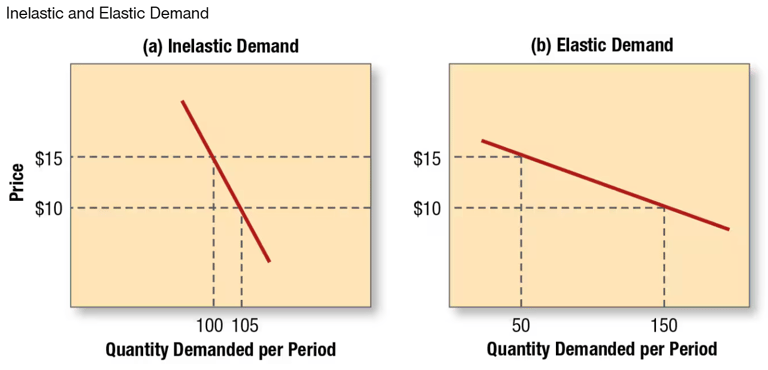
Understanding consumer demand is key to pricing. Businesses use surveys, historical sales data, and price elasticity analysis to determine how much customers are willing to pay. If demand is inelastic (essential products like medicines), prices can be set higher. If demand is elastic (luxury goods), businesses need to be careful with pricing fluctuations.
3. Estimating Costs
Pricing must cover costs while ensuring profitability. Companies calculate:
Fixed Costs – Costs that remain constant, such as rent and salaries.
Variable Costs – Costs that vary with production, like raw materials.
Total Costs – The sum of fixed and variable costs.
For example, a car manufacturer like Maruti Suzuki ensures that pricing covers both production and operational expenses while remaining competitive.
4. Analyzing Competitor Prices
Competitor pricing analysis helps businesses position themselves effectively. If a competitor offers a product at $50, a brand can price slightly lower to attract cost-conscious buyers or slightly higher with additional features. Online marketplaces like Amazon and Flipkart frequently adjust prices based on competitors’ pricing strategies.
5. Selecting the Pricing Method
There are several pricing methods businesses can adopt:
Markup Pricing
Retailers like Walmart use markup pricing, where they add a fixed percentage to the cost price to set the final price.
Example: If a product costs $50 to produce and the company applies a 20% markup, the final price will be $50 + ($50 * 0.20) = $60.
Target-Rate-of-Return Pricing
Companies like airlines and hotels use this approach, setting prices based on a desired return on investment (ROI).
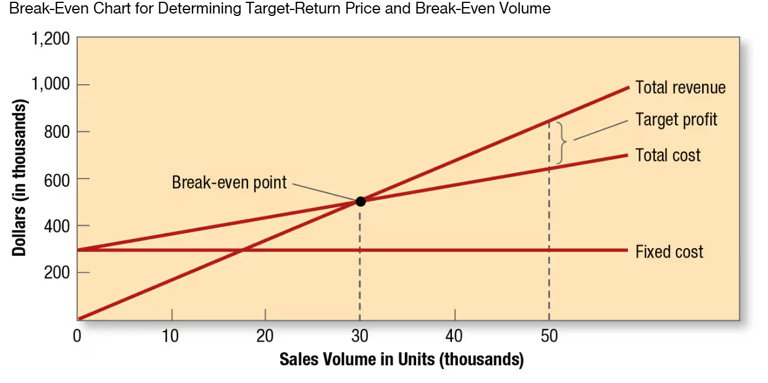
Example: the toaster manufacturer has invested $1 million in the business and wants to set a price to earn a 20 percent ROI, specifically $200,000. The target-return price is given by the following formula:
The manufacturer will realize this 20 percent ROI, provided its costs and estimated sales turn out to be accurate. But what if sales don’t reach 50,000 units? The manufacturer can prepare a break-even chart to learn what would happen at other sales levels . Fixed costs are $300,000 regardless of sales volume. Variable costs, not shown in the figure, rise with volume. Total costs equal the sum of fixed and variable costs. The total revenue curve starts at zero and rises with each unit sold.
Economic-Value-to-Customer Pricing
Tech companies like Adobe use value-based pricing, where the price is set based on the perceived value to the customer rather than cost.
Example: A software subscription may cost $200 annually, but if it helps businesses save $2,000, the pricing reflects the perceived economic value.
Competitive Pricing
E-commerce giants like Amazon use dynamic pricing, adjusting their prices based on competitors’ prices in real-time.
Example: If a competitor sells a product for $80, Amazon may adjust its price to $78 to attract more buyers.
Auction Pricing
Platforms like eBay use auction-based pricing where customers bid for products, allowing the highest bidder to purchase the item.
Example: A rare collectible item starts at $100, but due to high demand, bids increase, and the final price reaches $500.
6. Setting the Final Price
After considering costs, demand, competition, and the chosen pricing method, the final price is set. Businesses may offer discounts, seasonal pricing, or psychological pricing ($9.99 instead of $10) to attract buyers. For example, brands like Zara use limited-time discounts to boost sales.
Conclusion
Pricing is more than just assigning a number to a product; it is a strategic decision that impacts brand positioning, customer perception, and profitability. By following a structured pricing process, businesses can achieve their financial goals while delivering value to consumers.
Implement these pricing strategies wisely, and watch your business thrive in the competitive marketplace!


Frequently asked questions
A. What is the most effective pricing strategy for startups?
Startups often benefit from penetration pricing to build market share quickly. This approach involves setting lower initial prices to attract customers and establish a presence in the market. Once a loyal customer base is developed, startups can transition to value-based pricing to reflect the product’s perceived worth.
B. How does pricing affect brand perception?
Pricing significantly impacts brand perception by signalling quality and value. Premium pricing often conveys exclusivity and high quality, as seen in luxury brands like Rolex. On the other hand, excessively low pricing might lead consumers to question the product’s quality or authenticity.
C. What tools can businesses use to analyze pricing effectiveness?
Businesses can utilize tools such as price optimization software (e.g., PROS, Vendavo), competitive analysis platforms (e.g., Price2Spy, Competera), and customer feedback systems. These tools help analyze market trends, monitor competitor pricing, and assess consumer responses to pricing strategies.
Related articles
Connect
Stay updated with our latest marketing insights.
Follow
Subscribe
+919818636980
© 2025. All rights reserved.